Salt, Sand and Sixty Kilos: A Realistic Seaside Plan for Your Leonberger
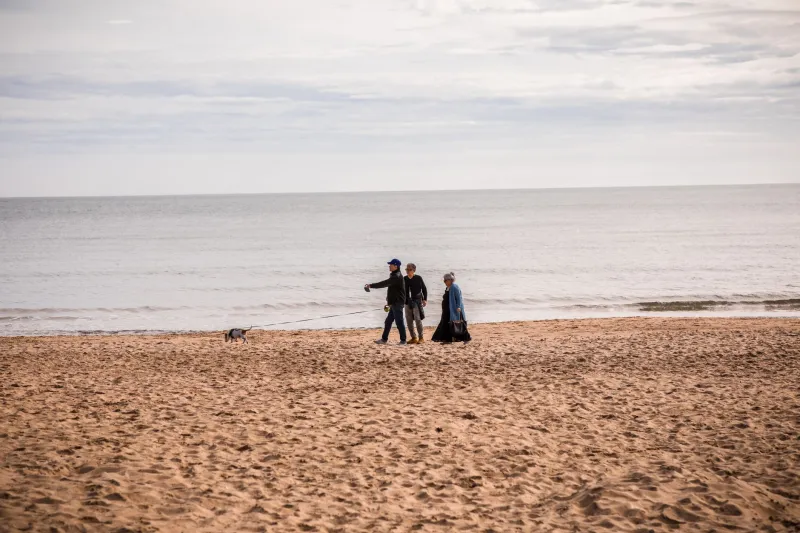
A bright November 2026 morning on the British coast is hard to beat: empty sand, cold air, and a Leonberger bouncing along like a very large, very hairy kite. But that picture needs a bit of planning. A sixty-kilo dog on a beach is not the same as a spaniel on a beach. The coast is a shared space with tides, local rules, wildlife and a surprising number of hidden hazards — and a giant dog amplifies all of them.
Check the rules before you check the tide
It is tempting to assume that out-of-season means out-of-rules. Not quite. Many UK councils operate seasonal dog bans or lead-only zones between Easter and the end of September, but the details vary enormously from beach to beach. Some restrictions run year-round, some cover only a section of sand, and some are enforced on the promenade rather than the shoreline. Check the local council website and the signage at the access point before you unclip the lead. If the beach sits within a nature reserve, Site of Special Scientific Interest or National Trust land, assume there are extra conditions around dunes, nesting birds and fragile plants.
Out of season, you may also find that facilities are shut, bins are sparse and the nearest emergency vet is further away than you expected. A quick look at the tide table, the car park closing time and the location of a 24-hour practice is boring admin that pays for itself.
Tides, cliffs and the illusion of space
British beaches can change shape in minutes. A wide flat strand at low tide can become a narrow strip with a fast-moving channel behind it. Use a proper tide table — the Admiralty or a trusted local harbour source — rather than a glance at the sea. If the beach has a reputation for mud, quicksand or cut-off sandbanks, believe it. Leonbergers are not natural lifeguards and will happily follow a ball into trouble.
Cliff paths deserve the same respect. Coastal erosion is a real issue around much of the UK, and the edge is not always obvious under grass or scrub. Keep your dog back from overhangs, and don’t stand near the brink for a photo. If the RNLI has put up a warning sign about the tide or the cliffs, it is not being dramatic.
The hidden menu: salt water and sand
Sea water is the classic beach hazard for big dogs. A Leonberger who spends twenty minutes retrieving a toy from the surf can swallow a lot of salt water — enough to cause vomiting, diarrhoea, dehydration and, in serious cases, salt poisoning. Take fresh water and a bowl, offer it often, and don’t let your dog drink from rock pools or the sea. If you are worried about salt intake, rinse the mouth gently with fresh water rather than letting them lick it off their coat.
Sand is the quieter problem. A ball thrown along the sand picks up grit, and a dog who repeatedly picks it up can swallow more than you would think. Heavy sand ingestion can cause impaction, especially in a dog that is already a bit sluggish. Use a toy that doesn’t scoop up half the beach, and keep an eye out for vomiting, straining or a sudden lack of interest in dinner.
Paws on shingle, sand and cold ground
Leonberger paws are big, but they are not armour. Shingle, shells, broken glass and fishing hooks are all common on UK beaches, and wet sand can abrade pads over a long walk. Check paws after every trip — between the toes, around the pads and up the legs. Some dogs tolerate boots; many do not, and a giant dog clumping around in unfamiliar footwear is its own comedy. If you skip boots, go shorter rather than longer, and avoid the roughest shingle at speed.
Cold ground is not just a winter issue. Wet sand pulls heat away quickly, and a dog who has been standing in the shallows for a while can get chilled without you noticing. Dry towels and a spare blanket in the car are not luxuries when you are trying to dry a Leonberger in a windy car park.
The rinse routine is not optional
Salt and sand dry into a stiff, itchy coat, and a dog who licks it off is ingesting more salt. A thorough fresh-water rinse of the legs, belly and paws after the beach is the simplest way to avoid a skin flare-up and a car that looks like a sandpit. Towel dry properly, especially under the chest and between the toes, and give the ears a quick check. If your dog has been in the sea, a rinse is more important than a full bath — you are trying to remove salt, not strip the coat.
Sharing the sand politely
A Leonberger is a friendly dog, but not everyone on the beach wants to meet one at speed. Keep the lead on around other beach users, children, picnics, horse riders and anyone fishing. If your recall is not solid with distractions, use a long line rather than trusting the moment. Wildlife matters too: disturb nesting birds, seals or anything that looks like it might be a protected species, and you can turn a nice walk into a conversation with a warden.
And yes, the poo bags. A giant dog produces giant evidence. Carry more bags than you think you need, tie them securely and take them to a bin — wind and tide have a way of redistributing anything left behind.
A kit list that suits a giant dog
Fresh water — several litres, not a tiny bottle. A bowl. Two towels. A slip lead and a long line. A toy that does not scoop sand. Waste bags. A basic first-aid kit. A blanket for the car. The number of a nearby vet. And a map, because phone signal on the coast is not guaranteed. It sounds like a lot for a walk, but a Leonberger trip is not a quick pop out. It is an expedition with a tail.
When to call it a day
Shivering, limping, vomiting, lethargy or a dog who suddenly refuses to move are all reasons to stop and get warm and dry. If you suspect salt poisoning or sand impaction, call the vet rather than waiting to see how it goes. The sea will still be there next month.
The British coast is genuinely wonderful for a Leonberger. It offers space, smells and a change of scenery that a suburban park cannot match. But the best seaside days are the ones where you have checked the rules, watched the tide, brought fresh water and accepted that the beach is a shared space — not a giant dog park. Plan for the big dog, and the big dog gets the big day.