Channel-Crossing Lions: A Realistic Europe Checklist for Leonberger Owners in 2026

A Leonberger abroad sounds brilliant in theory: mountain views, long lunches, a giant dog snoozing under a café table. In practice, it is a 60kg logistics project with a passport attached. That does not mean you should cancel the idea. It does mean the trip needs to be planned like a small expedition, not a last-minute weekend away.
This is a checklist-led look at the realistic bits: the paperwork, the crossing, the car and the place you will stay. It is not a substitute for checking the latest rules on gov.uk or speaking to your vet, but it should help you work out whether a European trip is sensible for your dog in 2026.
Start With the Honest Question: Is This Trip Right for Your Dog?
Before you look at ferry timetables, think about the dog in front of you. A young, fit Leonberger who travels well may take a Channel crossing in stride. An older dog with stiff hips, a nervous temperament or a recent health issue may find the whole thing miserable — and that is before the return journey.
Ask yourself a few blunt questions. Can your dog cope with several hours in a car, including queuing? Does he settle in unfamiliar places? Is he comfortable being left in a vehicle for a short crossing, or would a ferry kennel be less stressful? How does he handle heat? A summer trip through France can be lovely for humans and punishing for a thick-coated giant.
If the answer to any of those is a firm no, a European holiday may not be the kindest choice. A trusted dog sitter or a UK-based break can be the better option. That is not a failure. It is good ownership.
The Paperwork Timeline (and Why It Is Not a Friday-Night Job)
The rules for taking a dog from Great Britain to the EU are not the same as they were before Brexit. A GB pet passport is no longer accepted for EU travel. In most cases you will need an Animal Health Certificate (AHC), issued by an Official Veterinarian shortly before travel. The certificate has strict timing rules, so book the appointment early and confirm exactly what your vet needs.
Rabies vaccination is the other big date. Your dog must be microchipped before the rabies vaccination, and the vaccination must be given at least 21 days before travel. If the rabies booster has lapsed, the clock restarts. Do not guess this. Check your vaccination records with your vet and build the travel date around them, not the other way around.
For the return to Great Britain, most dogs need tapeworm treatment from a vet within a set window before arrival. The treatment must be recorded correctly. The exact timing and approved products matter, so confirm the current requirements with your vet or APHA before you book the return crossing.
Carry the original paperwork, plus photocopies and photos on your phone. Keep it in a plastic wallet. Airport-style admin is dull, but it is much duller when you are rummaging through a glovebox at a pet check-in lane.
Eurotunnel or Ferry? The Giant-Breed Reality
For a Leonberger, the crossing choice is often less about price and more about space and stress. Eurotunnel is usually the simpler option for a giant breed. You check in, stay with the dog in the vehicle and make a short crossing. There are no kennel-size worries and less time for sea sickness. The trade-off is that you must manage ventilation and queuing carefully, especially in warm weather.
Ferries can work well, but they need more research. Some operators offer pet-friendly kennels, but a 60kg dog may not fit comfortably in a standard one. Others allow dogs to stay in the vehicle, subject to rules. Crossing times are longer, sea conditions vary and the whole experience can be noisier. If you go by ferry, book early, ask specifically about large-dog kennels or vehicle stays, and choose a route and time that suits your dog rather than the cheapest fare.
Whichever you pick, book a flexible ticket if you can. A delayed vet appointment or a dog who refuses breakfast is easier to manage when you are not locked into a rigid timetable.
The Vehicle Is Part of the Passport
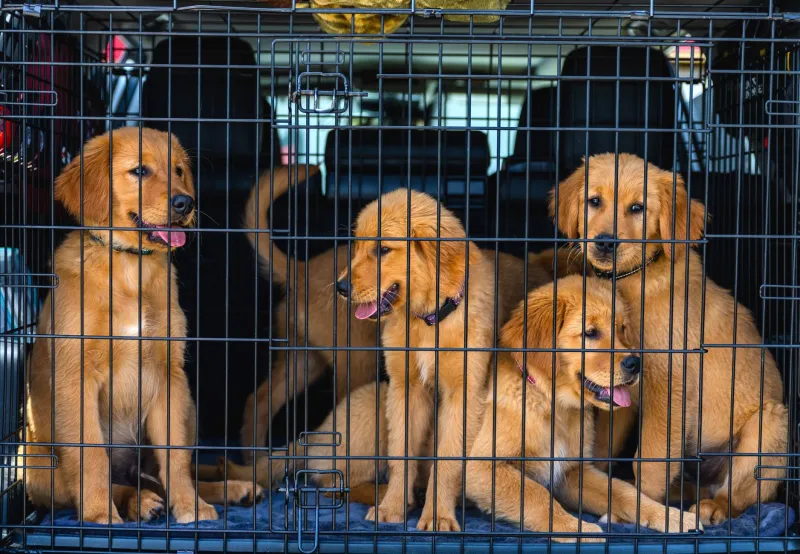
A Leonberger needs room to lie down properly, good ventilation and a familiar bed. A crash-tested crate or guard is the sensible starting point. Do not rely on a flimsy harness alone for a dog this size. Practise short journeys before the big one, including a stop where you get out, open the boot and let the dog settle again.
Plan breaks every couple of hours. Offer water, shade and a chance to toilet, but keep the dog on lead in busy service areas. Avoid heavy meals right before a crossing. Take a spare towel, a water bowl that does not tip, and something that smells of home.
Never leave a dog alone in a parked car in warm weather. Even a cloudy day can turn a vehicle into an oven. If the crossing queue is long, speak to staff rather than guessing your way through.
Accommodation: ‘Pet-Friendly’ Is Not ‘Leonberger-Friendly’
This is where many trips fall apart. A hotel that accepts a small terrier may not accept a 60kg dog, and a ‘pet-friendly’ cottage may have narrow stairs, a tiny lift or a weight limit buried in the terms. Ask directly about size, floor space, secure outdoor space and any extra cleaning charge. Get it in writing.
Gîtes, cottages and ground-floor apartments are often easier than city hotels. Check whether the garden is actually secure, whether there are stairs to the bedroom and whether the dog can be left alone at all. Also check local rules for beaches, restaurants and public transport. Europe is not uniformly dog-friendly; it varies by town, season and venue.
A Simple Go/No-Go Checklist
Before you pay a deposit, run through this list:
- Microchip and rabies dates fit the travel window.
- AHC appointment is booked with an Official Veterinarian.
- Return tapeworm appointment is booked with a vet abroad.
- Crossing type is chosen and large-dog space is confirmed.
- Accommodation accepts a 60kg dog in writing.
- Car crate, ventilation and break plan are sorted.
- Insurance covers European travel and the dog’s breed size.
- You have a vet contact near your destination.
- Your dog is physically and temperamentally up to the journey.
If any answer is shaky, delay the trip. A Leonberger will not thank you for a beautiful view if the journey there was miserable.
Final Thoughts
A successful European trip with a Leonberger is mostly boring admin done early. Get the paperwork sequenced, choose the crossing that suits the dog rather than the driver, and be honest about accommodation. Do that, and the actual holiday can be what it should be: a relaxed week with a very large dog asleep in the shade.