Sixty Kilos by the School Gate: A Calm, Repeatable Routine for the UK School Run
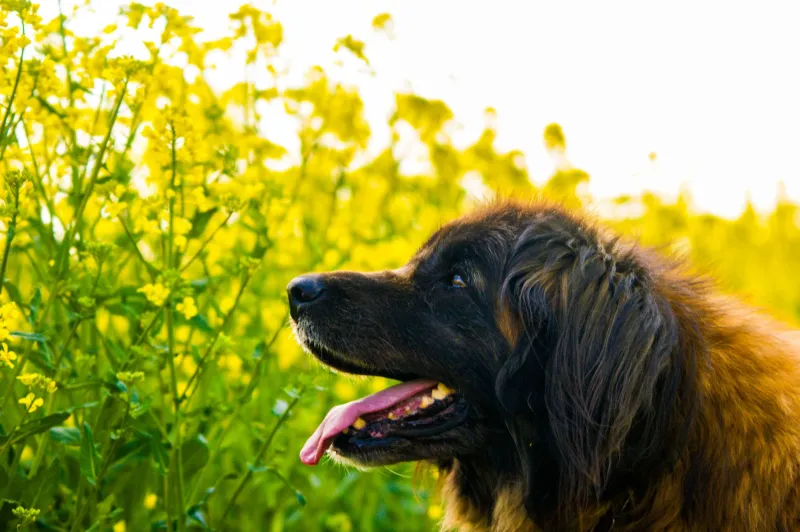
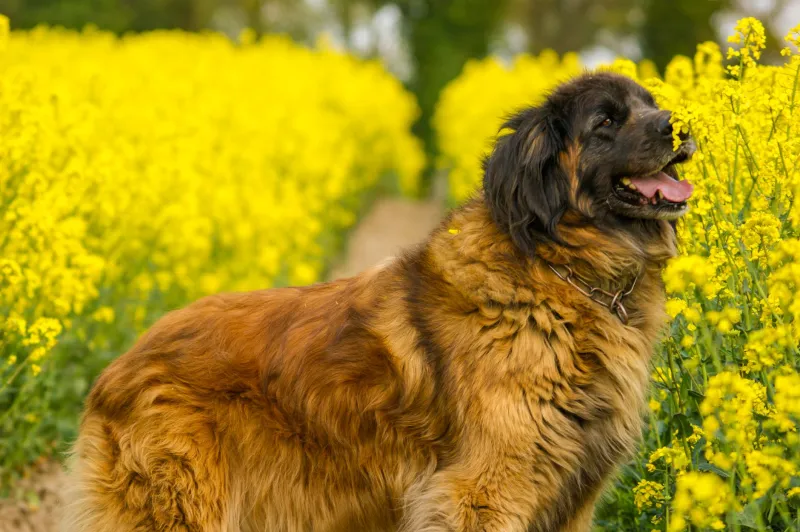
The 3pm bell is not a gentle event. It's a small, controlled explosion of scooters, siblings, buggies and shouted surnames, and if you happen to be standing at the edge of it with sixty kilos of Leonberger on a lead, you'll feel every bit of that explosion travel straight down your wrist.
None of which means your dog shouldn't come. It means the school run deserves a plan the way a day on the Kinder Scout plateau deserves a plan — not because disaster is likely, but because the variables are other people, and other people are unpredictable at 3:15pm.
Here's the routine that's worked for us across two terms of drop-offs, plus the scripts and small checks that keep it boring in the best possible way.
Walk the route without the dog first
Before you take a giant breed anywhere new twice a day, do a dry run. On a normal Tuesday, walk the route at 8:30am and again at 3:15pm with no dog and no child. You're looking for three things.
- Pinch points. Which stretch of pavement narrows to a single-file squeeze? Where do the buggies queue? Which gate gets the crush?
- Escape routes. Where can you step back, into a driveway entrance or a wide bit of verge, if you need to get out of the flow?
- Crossing spots. Not the nearest crossing — the widest, calmest one, even if it adds ninety seconds.
You'll come away with a picture of the school gate that has nothing to do with your dog, and that's the point. You're fitting him into an existing system, not building a new one around him.
Parking is where neighbourhood goodwill lives or dies
Most of the friction around school runs isn't about dogs. It's about cars. A few things worth being strict about:
- Keep-clear zig-zags outside the school are there for sightlines. Don't stop on them, even for a minute.
- Dropped kerbs and double yellows are an obvious no, but the one people forget is the ten-metre rule near junctions.
- Pavement parking is banned outright in Scotland and restricted in parts of London. Even where it's tolerated, a Leonberger needs a full door swing to get out safely — you'll want a proper bay.
My strong preference: park five minutes' walk away and treat the last stretch as a leg-stretch and sniff stop. It costs you a few minutes and buys you a calmer dog, a cleaner conscience and neighbours who don't sigh when they see your car.
The two-metre bubble at the gate
The single most useful habit is standing further back than feels natural. Position yourself off to one side, dog on a short lead, body turned slightly side-on so he isn't face-to-face with the oncoming tide. Ask your child to come to you, rather than wading into the scrum to collect them. It feels odd for a week and then it becomes the obvious way to do it.
That gap is not unfriendliness. It's the space that lets a child approach calmly rather than being swamped, and it gives you a moment to see a buggy coming before it's under his paws.
What to say when children — and adults — ask
Children will ask. Often loudly, sometimes from behind. A few phrases I've found work better than a flat no or a hopeful yes:
- To a child: "He's friendly, but he's working right now. Ask your grown-up first, then ask me, and I'll tell you if it's a good moment."
- If it is a good moment: "Hold your hand out low and still and let him come to you. Don't put your hand over his head."
- If it isn't: "Not today — he's had a busy morning. Thanks for asking nicely, though."
- To an adult who approaches from behind: "We're training, so we're going to keep moving. Thanks for checking first."
That last one matters. A dog this size needs people to ask before they touch, and a polite, cheerful script does more for the breed's reputation than any number of gentle-giant myths.
Prams, scooters and the bottleneck problem
Don't be the bottleneck. If you're standing at the narrowest part of the pavement with a Leonberger, you are, functionally, a roadblock with a tail. Stand at the wide end, let the buggy traffic clear, then move. Wet leaves under a scooter wheel plus a startled dog is a combination nobody needs in November.
Wet weather and dark afternoons
By mid-November, pick-up is happening in near-darkness. A reflective lead, a hi-vis harness or slip-on tabard and a small head torch are not overkill — they're the difference between being seen and being a shape at the kerb. Keep a towel and a spare old bath sheet in the boot; a wet Leonberger in a warm car smells like a pond that's been to the gym.
Also worth knowing: wet tarmac, sloped pavements and painted white lines are all slippier than they look. A sixty-kilo dog who loses his footing will take you with him, so slow down rather than speeding up to get out of the rain.
The repeatable routine, start to finish
- Park five minutes away, in a proper bay.
- Short lead on before the car door opens — always.
- Walk the last stretch at sniffing pace. It's a decompression, not a sprint.
- Arrive early and stand off to one side, not at the gate.
- Let your child come to you.
- Greet briefly, then move out of the flow before the chat.
- Cross at the wide, calm spot, not the nearest one.
- Towel, water, home.
Sometimes the kindest choice is staying home
Crowded school fairs, nativity plays in a hot hall, the last day of term when the gate is double-staffed with balloons — all fine reasons to leave him on the sofa. A Leonberger doesn't need to be at every school event to be part of family life. He needs to be there when he can do the job comfortably, and at home when he can't.
Get the routine right and the school run stops being an ordeal. It becomes the bit of the day where a very large dog walks a very short distance very well — which, frankly, is most of what we're aiming for.