Nothing Happens Here: The First 72 Hours With a Rescue Leonberger

Bringing home a rescue Leonberger is not the same as bringing home a puppy. A puppy arrives with a blank sheet and a built-in willingness to follow you around. A rescue might arrive with habits, worries, a history you will never fully know and absolutely no idea why there is a sofa in the middle of the room. The first 72 hours are not a training camp. They are a settling-in period, and the best thing you can do for everyone is make them uneventful.
The house is the hazard, not the dog
Before the car pulls into the drive, walk through your home as though a 60kg dog with no house rules is about to move in. Because one is. Clear the obvious dangers: chocolate, grapes, raisins, medication, small toys, dangling cables, bin bags within reach and anything on a low shelf that could be swallowed or knocked over. Check your garden for gaps, loose fence panels and anything sharp. If you have a patio door, make sure it cannot be pushed open by a nose the size of a dinner plate.
Think about floors too. A giant breed on laminate or tile can slip, especially if they are anxious and moving quickly. Put down a couple of runners or old rugs in the main walkways. It looks less like a show home and more like a dog home, which is the point.
Set up a quiet zone before they arrive
A rescue Leonberger may never have lived in a house. Stairs, doorbells, washing machines, television noise and central heating can all be strange. Set up a quiet zone in a low-traffic room or a corner of the living room: a sturdy bed, a water bowl, a couple of safe chew items and a clear line of sight to a wall rather than a busy doorway. This is not a punishment area and it should not be shut away behind a closed door for hours. It is a place to retreat to when the world gets too much.
If you have children, explain that the quiet zone is out of bounds. A rescue dog needs somewhere to go where nobody follows. That includes the cat.
Day one: arrive with as little ceremony as possible
When you get home, take the dog straight into the garden on a lead for a sniff and a toilet opportunity. Then bring them inside and let them explore the quiet zone and one room. Keep voices low, keep visitors away and resist the urge to introduce them to the whole family at once. If people live in the house, they can say a brief hello one at a time, sitting down, without crowding. No hugs, no looming over the dog, no high-pitched squeals. A rescue Leonberger does not need a welcome party. They need a chair and a bit of peace.
Expect the dog to pace, pant, hide, follow you from room to room or lie down and do nothing at all. All of those are normal. Do not interpret a wagging tail as instant happiness or a withdrawn dog as a problem. The first day is a data-gathering exercise for them. Let them gather it.
Feeding and toilet routines: keep it dull
Ask the rescue centre what the dog has been eating and stick to it for at least the first week. Sudden changes in food, on top of stress, are a fast route to loose stools. Feed small, regular meals rather than one large one, and pick the bowl up after twenty minutes. A giant breed can be surprisingly delicate about new surroundings, and a stressed dog may not eat much on day one. Note what they do eat, and when.
Take them out to the garden every couple of hours on a lead, especially after meals, after waking and before bed. Reward calm toileting with quiet praise, not a party. If there is an accident, clean it up without drama. The dog is not being defiant. They are learning a new routine in a place that smells of other people and other animals.
Introductions to existing pets: slow is fast
If you already have a dog, do not let them meet in the hallway and hope for the best. A brief, parallel walk outside, with both dogs on lead and enough distance between them, is a better start than a face-to-face greeting in a confined space. Keep toys and food out of the equation. For the first few days, manage the house so both dogs can move around without feeling trapped. Baby gates are useful here, not as a permanent solution but as a way to give everyone space.
Cats are a different matter. A rescue Leonberger may have never lived with one, and a cat may have never seen a dog that size. Give the cat high places to escape to and do not force an introduction. A closed door and a slow scent swap is far kinder than a chaotic first meeting in the kitchen.
Book the vet check, but not as an emergency
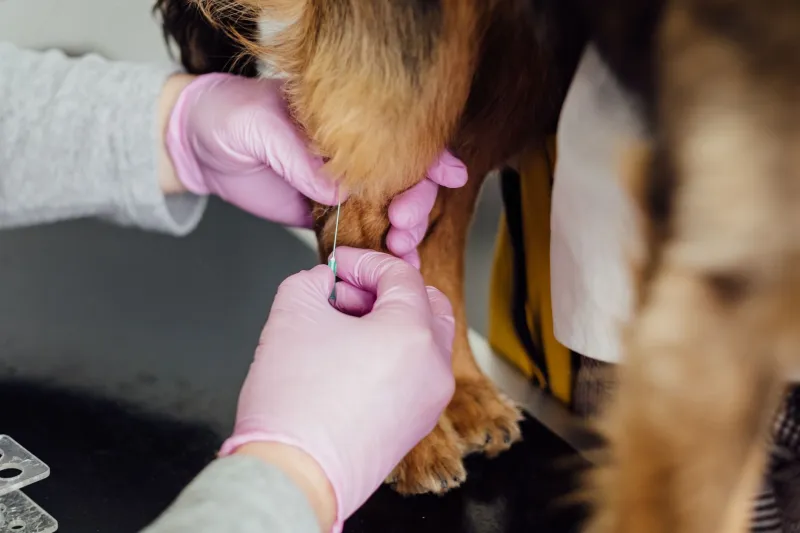
Unless the rescue has flagged an urgent health issue, book a routine vet appointment for within the first few days. Bring any paperwork, vaccination history and microchip details you have. The appointment is mostly a baseline: weight, general health, teeth, ears, mobility and a conversation about worming and flea treatment. It also gives the dog a calm, positive first experience of the vet when they are not already in pain or panic.
If you have not already, check whether the rescue has arranged insurance or a health plan. A Leonberger is not a cheap dog to insure, and the sooner you know where you stand, the better.
What not to do in the first 72 hours
Do not invite the extended family round. Do not take them to the local park, the pub or the pet shop. Do not start formal training beyond gentle name recognition and toilet trips. Do not bath them unless the rescue has advised it. Do not assume they can manage stairs, and do not leave them alone for long stretches. If you need to pop out, keep it short and build up gradually.
The goal is not to see the real dog in three days. The goal is to create a predictable little world where the real dog can eventually feel safe enough to show up. Some rescue Leonbergers will settle within a week. Others will take months. Both are normal.
By day three, you might have a dog who follows you everywhere, a dog who still sleeps by the door, or a dog who has discovered the sofa and refuses to leave it. All of that is fine. Nothing has happened, and that is exactly what you were aiming for.