The Honest Rib Check: A Home Weight Plan for UK Leonbergers
If you have ever stood on bathroom scales with a sixty-kilo Leonberger in your arms, you already know the plan has a flaw. The numbers wobble, the dog leans, your back protests, and nobody feels confident about the result. Weighing a giant breed should not require a stunt double. Yet weight matters enormously for Leonbergers, because even a few extra kilos puts strain on growing joints, older hips and a heart that is already working hard. The good news is that you do not need a veterinary scale in your spare room. You need a routine, a pair of hands and a little honesty.
Why the bathroom scale is not your friend
A standard household scale is designed for a person standing still. Add a wriggling Leonberger and you introduce three problems at once. First, the combined weight may push cheaper scales past their limit or into an unreliable range. Second, lifting and holding a large dog safely is difficult, especially on a tiled floor. Third, the reading only tells you the total, not whether your dog is carrying too much condition around the ribs or looking leaner than last month.
That does not mean bathroom scales are useless. They can work if you use the weigh-yourself-then-weigh-yourself-holding-the-dog method with a second person spotting and a very steady dog. But for most UK owners, it is a faff. Treat it as a backup, not the foundation of your weight-watch plan.
Start with your hands
Body condition scoring is the quiet hero of home weight checks. You are not guessing whether your Leonberger is overweight by comparing them to the dog down the park. You are feeling for coverage over the ribs, looking for a waist from above and checking the tuck behind the ribcage.
Use a flat palm rather than fingertips. On a Leonberger in ideal condition, you should be able to feel the ribs under a light layer of flesh without pressing hard. They should not be visibly sharp, and they should not be buried under a thick cushion. From above, there should be a gentle hourglass rather than a straight barrel. From the side, the belly should tuck up slightly behind the ribs. Most breed guidance puts the ideal around four to five on a nine-point scale, but your vet or vet nurse can show you what that feels like on your own dog.
Do this check once a month, on the same day, and take a photo from the side and from above. Photos are brutally honest. They also help you spot a slow drift that weekly cuddles hide.
Finding a proper scale without buying one
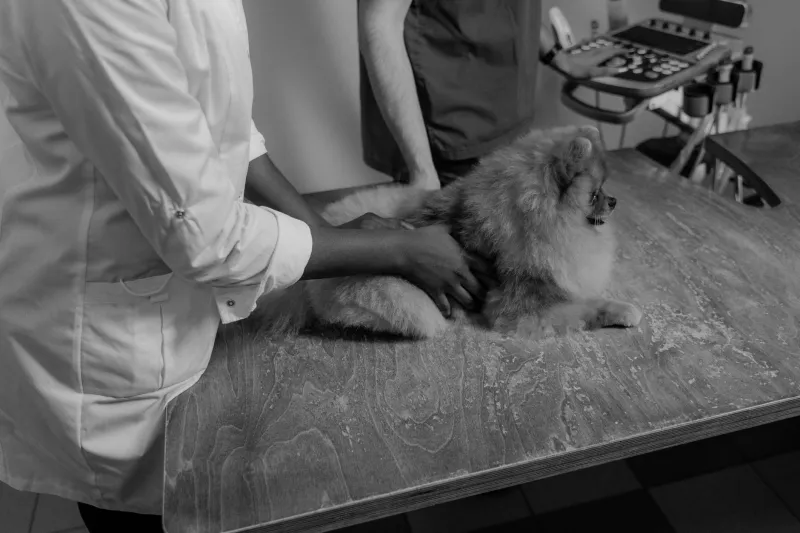
You do not need to own a platform scale to get a reliable number. Ask your vet practice whether you can use their waiting-room scales. Many UK practices are happy for clients to pop in for a quick weigh-in, especially if you ring ahead and avoid the busiest consultation times. A vet nurse can also record the weight and add it to your dog’s notes.
Other options include local pet shops with large dog scales, agricultural merchants, breed club events and dog shows. Some self-storage sites and recycling centres have public weighbridges, but these are usually outdoors, noisy and not designed for anxious dogs, so treat them as a last resort. A borrowed platform scale from a local dog club is ideal if you can store it safely. Avoid sling-style luggage scales for a sixty-kilo dog unless you have been shown exactly how to use them; one wrong move and you have a welfare problem, not a weight reading.
A simple weigh-in routine
Pick one scale and stick to it. Weigh your Leonberger at roughly the same time of day, ideally before breakfast and after the first toilet trip. Use the same harness or collar, or no equipment at all, so you are comparing like with like. Scatter a few treats on the platform and let the dog approach in their own time. Two people make it easier: one to steady the dog and one to read the display. Keep the session short, calm and boring. A weigh-in should feel like a slightly odd game, not a vet visit.
Record the number in your phone, along with the date and the scale used. A monthly weight is plenty for most adult Leonbergers. If your dog is on a diet or recovering from illness, your vet may ask for fortnightly checks.
Growth tracking from puppy to adult
Leonberger puppies grow quickly, but they do not all follow the same curve. Weigh weekly until around sixteen weeks, then fortnightly until six months, then monthly until eighteen months. After that, quarterly checks are usually enough unless your vet advises otherwise.
Do not chase the biggest number on a breed chart. A lean, steady puppy is generally better than a heavy one whose joints are being asked to carry extra condition. Your vet can plot weight against age and body condition, and that combination is far more useful than a single figure. If your puppy loses weight, refuses food or seems lame, ring the vet rather than waiting for the next scheduled weigh-in.
When a weight change deserves a vet call
For an adult Leonberger, an unexplained change of around five per cent of body weight is worth a conversation. On a sixty-kilo dog, that is roughly three kilos. A loss of three kilos over a month or two may not sound dramatic, but in a giant breed it can signal pain, dental trouble, digestive disease or something else that needs checking. Unexplained gain matters too, especially if the ribs are disappearing and your dog is less keen on walks.
Ring your vet promptly if weight change comes with reduced appetite, increased drinking, vomiting, diarrhoea, stiffness, low energy, coat changes or a sudden drop in enthusiasm. Senior Leonbergers deserve extra vigilance, because muscle loss and age-related conditions can creep in quietly. The same goes for winter, when muddy walks become shorter and treats become more frequent. Weigh before the festive season and again in the new year, and you will spot the drift before it becomes a problem.
A Leonberger does not need a perfect number on a scale. They need a consistent owner who checks with their hands, uses a reliable scale when possible and acts early when something changes. That is a far more dignified weigh-in than a sixty-kilo cuddle on bathroom scales.