Two Pairs of Hands and a Steady Voice: Moving an Injured Leonberger Safely
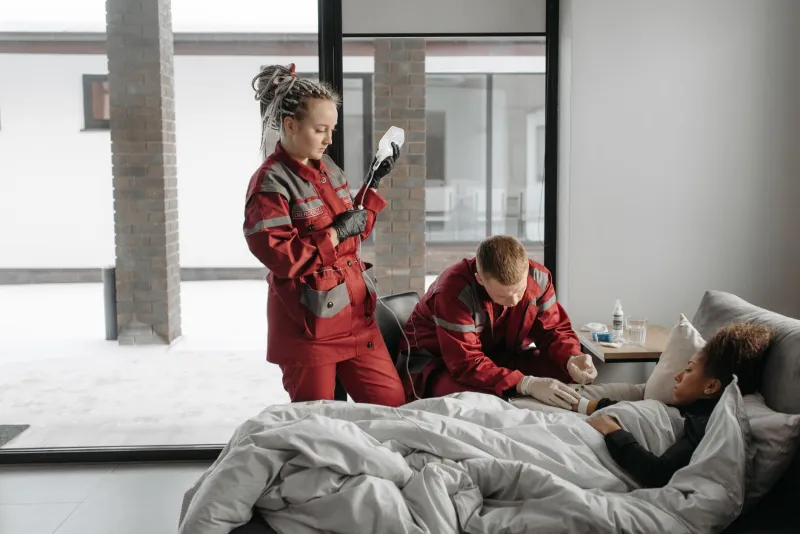
It is 7.20am, the kettle is on, and your Leonberger will not get up. Maybe he slipped on the kitchen tiles, maybe he has tweaked something chasing a squirrel, or maybe he is simply too sore to stand. Whatever the reason, the next ten minutes matter — and the last thing you need is two panicking humans trying to haul sixty-odd kilos of dog into the back of a hatchback.
The good news? A little planning turns a frightening situation into a manageable one. This is not about heroics. It is about having a rehearsed, two-person routine that protects your dog's spine, your back and everybody's nerves.
Why the two-person rule is not optional
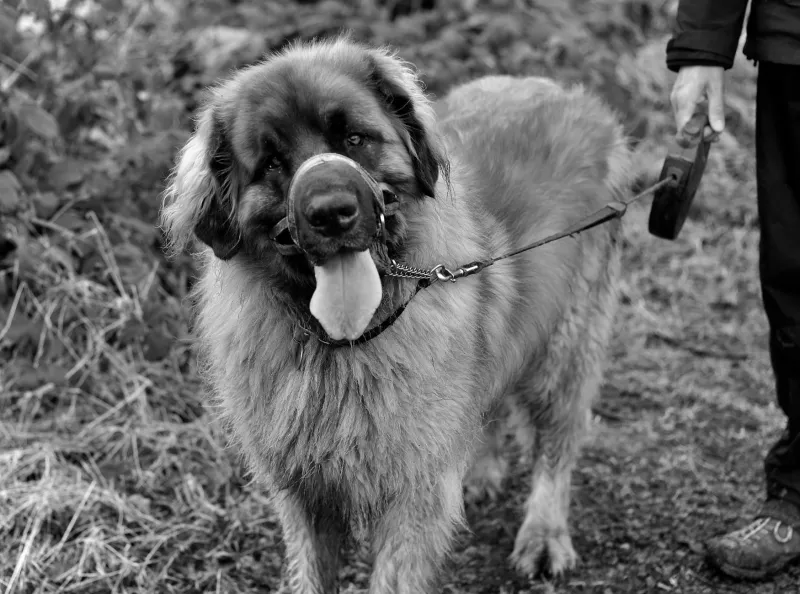
A fit adult Leonberger can weigh anywhere between 50 and 70kg, with a long back and a deep chest. That is not a "scoop and go" animal. Lifting by the front legs or collar is a fast route to injury — for the dog and for you. One person cannot safely control that much weight on a slippery floor, let alone on stairs.
So the rule is simple: two people minimum for any lift, and three if stairs or a vehicle are involved. If your dog may have hurt their spine — after a fall, a road incident or a bad landing — do not move them at all unless they are in immediate danger. Call your vet first and follow their instructions.
The kit to keep within reach
You do not need a hospital trolley. You need a few sturdy things in one place, ideally near the front door or under the stairs, so nobody is rummaging in a cupboard while your dog lies on the floor.
- A heavy-duty blanket, tarpaulin or purpose-made soft stretcher, at least 2m x 1.5m. Thin fleece will not do.
- A short, wide ramp if you have an estate car or 4x4.
- A thick towel or purpose-made sling for supporting a dog who can still walk a little.
- A non-slip mat or rug to put under paws on hard floors.
- A torch, even in daytime, and a pair of scissors in case you need to cut clothing or bedding away.
- Your vet's number, your out-of-hours number and your insurance policy details stuck to the fridge or saved in a phone note.
A sheet of plywood or a sturdy internal door can work as an improvised stretcher in a genuine pinch, but only if you have enough people to carry it steadily. An ironing board is not a stretcher. Please do not try it.
Rehearse before you need it
This is the part most of us skip. You do not need to practise lifting your dog for real. You do need to walk the route.
Measure your hallway. Check whether the blanket will fit through the kitchen doorway. Work out where the car can park closest to the house. Decide now who you would call — a neighbour, a family member, a dog-savvy friend — and actually ask them. "If I ever ring you in a flap, could you help me lift Alfie into the car?" Most people say yes. Very few are ever asked.
Then do a dry run. Put the blanket on the floor, encourage your dog to stand on it with a treat, and practise gathering the corners. Get your helper to count "one, two, three" with you. It feels faintly ridiculous. It also builds the muscle memory that stops you freezing when it matters.
The blanket lift, step by step
If your dog cannot stand but is safe to move, and your vet has agreed, this is the basic routine.
- Clear a path. Move shoes, dog beds and anything else that will trip you.
- Place the blanket alongside your dog, folded lengthways. Gently roll them onto it — one person supports the shoulders and chest, the other supports the hips and back legs. Keep the spine as level as you can.
- Unfold the blanket so your dog is centred, then gather the corners firmly on each side.
- Both humans squat with straight backs, take the weight on the count of three, and lift with the legs.
- Walk in short, shuffling steps. Do not twist. Do not rush. Keep the dog level and close to the ground.
If your dog can stand but is unsteady, use a towel sling under the belly instead. Support, do not drag. Let them set the pace.
Stairs, corners and the hallway problem
Stairs are where good plans go wrong. Going down is harder than going up, and a 60kg dog on a blanket is an awkward, swinging load. If you can, move your dog to a ground-floor room with direct access to the garden instead of attempting the staircase. Close doors behind you to stop them trying to follow.
If stairs are unavoidable, you need three people: two carrying and one steadying the dog and opening doors. Take one step at a time. Never carry a giant breed down stairs alone, and never let anyone "just grab a leg" to help.
Getting into the car without a wrestling match
An estate car or a 4x4 with a low boot floor is a gift here. Reverse the car right up to the door if you can. Lower the tailgate, lay a non-slip mat on it, and use a ramp if you have one.
Two people lift, one person guides. Keep the dog's body level as you slide them in. Someone should sit with them for the journey — a frightened Leonberger will often try to stand, and a dog loose in the boot is dangerous for everyone. Drive smoothly, take corners gently, and ring ahead so the vet team is ready.
When not to move them at all
Some situations need a vet on the way, not a DIY lift. Call immediately if you suspect a spinal injury, a fracture, a dislocated joint, bloat with unproductive retching, laboured breathing, a seizure or severe uncontrolled pain. In those cases, moving your dog could make things worse. Your vet may advise waiting for them, or may talk you through a supported transfer. Either way, phone first.
The calm plan beats the heroic scramble
Nobody enjoys thinking about the day their dog cannot walk. But a written plan, a clear route, a bag of kit and one willing neighbour can turn a terrifying morning into a controlled one. Rehearse it once. Tell someone where the blanket lives. Keep the vet number where you can find it with one hand.
Your Leonberger will probably never need it. If they do, you will be very glad you did the boring bit in advance.