The Kitchen-Follower Problem: Decoding Your Leonberger’s Need to Be Everywhere You Are

The shadow is part of the breed
Leonbergers were bred to live close to people. They are family dogs in the literal sense: big, sociable, and often deeply interested in where their humans are going next. So when your Leonberger follows you from the kitchen to the hallway, then to the bathroom, then back to the kitchen, that is not necessarily a design fault. It is often just the breed doing what the breed does.
But there is a difference between a dog who likes company and a dog who cannot cope without it. That difference matters more than ever in 2026, when many UK households are out at work, renting flats with thin walls, and trying to balance a 60kg dog with real-life neighbours and landlords.
Normal velcro vs separation distress
A normal velcro Leonberger will follow you around, flop near your feet, and maybe sigh dramatically when you leave the room. But he should be able to settle. He might get up to check where you are, then return to his bed. He might greet you warmly at the door, but he should not be frantic, sweaty-pawed, or unable to eat while you are out.
Separation-related distress looks different. It can include pacing, whining, barking, howling, destructive chewing, house soiling, drooling, escape attempts, or refusing food when alone. Some dogs will scratch at doors until their paws are raw. Others will stand by the window for hours. The clue is not how much your dog loves you; it is how poorly he copes when you are gone.
What UK home-alone guidance means for a giant dog
UK animal welfare guidance is clear that dogs should not be left alone for long periods, and that any time alone needs to be built up gradually. There is no single legal maximum that fits every dog, but the welfare principle is simple: a dog should be able to meet his social and behavioural needs across the day.
For a Leonberger, that principle comes with practical extras. A giant breed needs space to stretch out, access to water, and a safe place to settle. In a rented flat, a dog who barks for two hours can become a neighbour complaint very quickly. In a shared house, a 60kg shadow can make even a quick trip to the shop feel like a logistical operation.
This is not about guilt. It is about honest management. If your dog cannot settle for 30 minutes while you pop out, that is information. It is not a moral failing, and it is not something to hide from a landlord or a vet.
Exercises that build calm distance
Start with tiny absences. Ask your Leonberger to settle on a mat while you move around the kitchen. Reward him for staying there, not for following you. Build up to stepping into the hallway for five seconds, then ten, then thirty. Return before he starts to whine. The goal is success, not endurance.
Practice door work without drama. Touch the door handle, then sit back down. Put your shoes on, then make a cup of tea. Pick up your keys, then put them down. Repeat until these cues stop predicting a big emotional event.
Use a long-lasting chew or a stuffed toy when you leave the room, but only if your dog actually wants food when you are gone. If he ignores it, the step is too hard. A camera can be useful here: it tells you whether he settles after two minutes or paces for twenty.
Landlord-friendly management for rented homes
If you rent, be proactive. Tell your landlord or letting agent what your routine looks like, keep the hallway clear, and provide a pet CV if they ask. A written plan for exercise, toilet breaks, and alone-time training can be reassuring. Baby gates can keep a wet Leonberger out of carpeted rooms without making him feel shut away.
A dog walker or a trusted neighbour can break up a long day, but do not use that as a substitute for teaching the dog to cope. It is a bridge, not a solution. If you live in a flat, speak to neighbours early and honestly. A short note explaining that you are working on quiet settling can go a long way before a complaint lands.
Red flags that need professional help
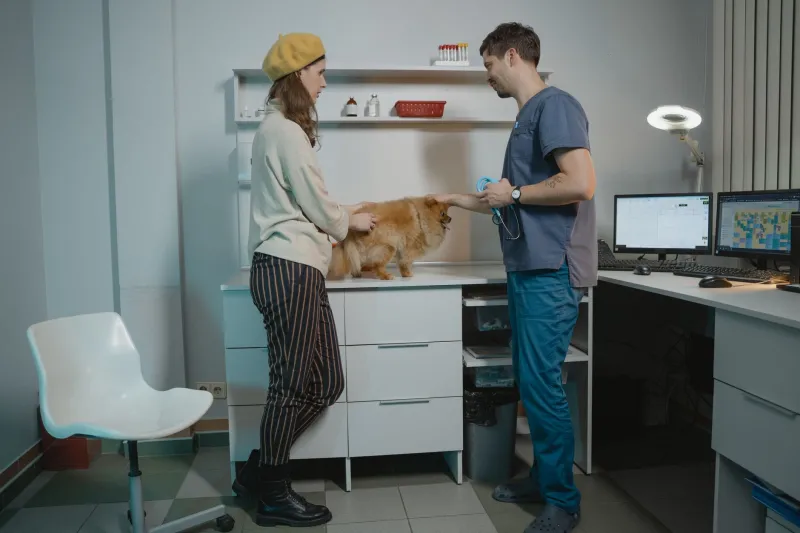
Ask your vet for advice if your Leonberger panics within minutes of being left, injures himself, tries to escape through windows or doors, howls for long periods, or cannot eat or toilet normally when alone. Separation-related distress is a welfare issue, not disobedience.
Your vet can rule out pain, medication side effects, or other medical triggers. For a full behaviour plan, ask for a referral to a clinical animal behaviourist registered with a recognised UK body such as the APBC or ABTC. A good plan will be gradual, realistic, and tailored to a giant dog in your actual home, not a generic leaflet.
A final thought: companionship without panic
A Leonberger following you around is often one of the breed’s great charms. It is lovely to have a 60kg shadow who genuinely wants to be where you are. But charm should not tip into panic. The aim is not to make your dog aloof; it is to teach him that you always come back.
If he can settle while you make tea, answer the door, or pop to the bins, you are on the right track. If he cannot, take it as a gentle nudge to build the skill — and to ask for help if you need it.