Big Dog, Real Life: Rethinking the Leonberger’s Gentle Giant Reputation
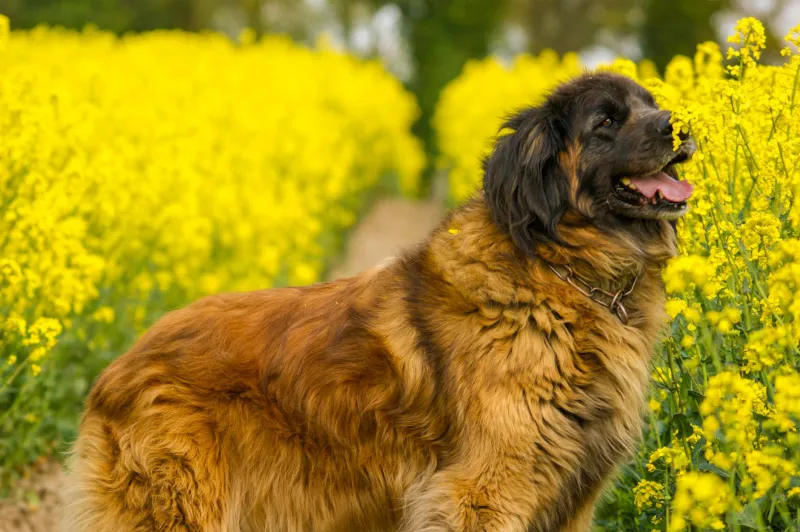
The Leonberger has a reputation problem, and it’s a flattering one. Everyone has heard the same story: calm, patient, gentle with children, a giant dog with a heart to match. That reputation is not invented. Many Leonbergers are wonderfully steady companions. But ‘gentle giant’ is a temperament sketch, not a user manual, and UK owners often discover the gap between the two only after a hundred-kilo puppy has rearranged their hallway.
This is a balanced opinion piece, not a takedown. The Leonberger is a brilliant breed for the right household. The problem is that the label ‘gentle giant’ does so much heavy lifting that people stop asking practical questions. How much exercise? How much shedding? How much training? How much car? How much vet bill? How much patience?
The label does a lot of heavy lifting
‘Gentle’ does not mean low-energy. It does not mean automatically well-behaved. It does not mean a dog that can be left to amble around a small garden and will somehow raise itself. A Leonberger can be gentle and still knock a coffee table sideways with one happy tail wag. It can be calm indoors and still need daily walks, sniffing and company. It can adore children and still need to be taught not to lean on them.
Sarah, who shares her home in Cheshire with a three-year-old male Leo, puts it bluntly: ‘People think because he’s big he’s automatically a sofa dog. He’s not. He’s a sofa dog after a proper walk, a training session and a chew. Before that, he’s a hundred kilos of opinions.’
That is not a criticism of the breed. It is a criticism of the shorthand.
Exercise needs aren’t extreme, but they’re non-negotiable
A Leonberger is not a husky. Most adults do well with moderate daily exercise, sniffing time and a bit of structure. But ‘moderate’ still means turning up every day, in the rain, when it’s dark by four o’clock. A garden is not a substitute for a walk. A busy household is not a substitute for training. And a giant breed that misses out on lead manners becomes a genuine safety issue, not just an inconvenience.
Mark, who lives in Fife with a bitch approaching her fifth birthday, says: ‘The biggest surprise was how much the small stuff mattered. Doorway manners, loose-lead walking, not jumping up. When a small dog jumps up it’s annoying. When a Leo does it, it’s a health and safety incident.’
Puppy and adolescent exercise needs careful handling because these dogs grow quickly and mature slowly. Long forced marches and repetitive stairs are not the goal. Short, sensible walks, free sniffing, safe play and lots of settling practice build a steadier adult dog.
The shedding is a season, not an event
The coat is magnificent. It is also a lifestyle. Leonbergers have a double coat and typically ‘blow’ coat around twice a year. In between, there is everyday shedding. During a coat drop, there can be tumbleweeds of undercoat in corners you didn’t know you had. Central heating makes the whole thing more noticeable.
Priya, a Bristol owner with two Leos, laughs about it now: ‘I bought a fancy vacuum before we got our first dog. I thought I was prepared. I was not prepared. Now I groom for ten minutes most days and I still find hair in the butter dish.’
A Leonberger is not a hypoallergenic breed. If shedding is a deal-breaker, that is worth knowing before you fall for the puppy. Daily grooming helps, but it doesn’t stop the coat drop. It just stops it becoming a matted coat drop.
Training a big dog is about small margins
Training a Leonberger is not about circus tricks. It is about living safely and pleasantly with a very large animal. Polite walking, recall, settling, waiting at doors, accepting handling and being comfortable around other dogs and people all matter more than a fancy spin. Reward-based training works well, but it needs consistency and early starts.
‘The breed is biddable, but they’re not robots,’ says Sarah. ‘If you let the cute puppy behaviour slide because he’s only little, you’re building a problem. A Leo puppy is only little for about five minutes.’
Group classes in the UK can be useful for socialisation and real-world distractions, but choose a trainer who understands giant breeds and force-free methods. A heavy dog that is yanked on a lead learns nothing useful. A heavy dog that is taught to walk calmly is a pleasure.
Space, cars, stairs and the practical stuff
It is not only about floor space. It is about layout. Narrow Victorian hallways, steep stairs and small cars can all become daily friction points. A Leonberger needs a comfortable place to stretch out, a car setup that is safe and roomy, and a household that can handle muddy paws and a big wagging tail.
Then there is the money. Food, insurance, vet care, grooming tools, a suitable crate or bed, and training classes add up. Giant breeds can also have breed-specific health concerns, so buying from a responsible breeder and asking about health screening matters. Rescue is another route, but be honest about whether you can meet a large dog’s needs.
The rewards are real, just not automatic
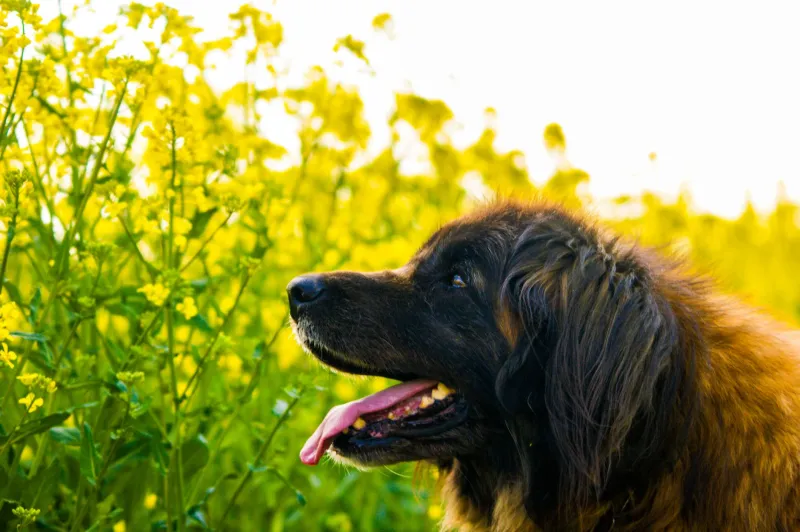
The gentle giant myth survives because the good parts are genuinely good. A well-raised Leonberger can be exceptionally affectionate, patient and calming to live with. Owners talk about the way they lean against you, the deep sigh when they settle, the surprising sensitivity behind all that size.
But the reward follows the work. The breed does not arrive pre-programmed as a serene family dog. It becomes one through socialisation, training, exercise, grooming, boundaries and time. That is the honest version of the gentle giant story, and it is a better story for UK owners than the fantasy.